Top Steel Construction Factory for Super Frame Metal Buildings
Sep . 19, 2025 10:30 Back to list
The Foundation of Modern Industry: Understanding the steel construction factory
In the rapidly evolving landscape of global manufacturing and logistics, the infrastructure that houses industrial operations is as critical as the machinery it contains. A steel construction factory stands as a testament to engineering prowess, offering unparalleled durability, flexibility, and cost-efficiency. These pre-engineered metal buildings (PEMB) are meticulously designed and fabricated off-site, then assembled with precision, significantly reducing construction time and on-site labor. They represent a paradigm shift from traditional concrete structures, catering to diverse industrial needs ranging from heavy manufacturing plants to state-of-the-art logistics centers. The inherent strength and adaptability of steel make it the material of choice for facilities requiring large clear spans, high bay areas for machinery, and the capacity for future expansion, underpinning the very backbone of industrial progress.
Modern industrial steel construction factory solutions are not merely utilitarian enclosures; they are sophisticated engineering marvels built to stringent specifications. They incorporate advanced design principles to optimize energy efficiency, accommodate complex operational workflows, and withstand severe environmental conditions. From the initial conceptualization to the final structural erection, every stage of a steel building project is governed by precision and adherence to international standards, ensuring longevity and operational excellence. This comprehensive approach ensures that facilities are not only robust but also sustainable, offering long-term value to businesses across various sectors.
Industry Trends and Market Dynamics
The global market for industrial steel buildings is experiencing robust growth, driven by several key trends. Sustainability is paramount, with a growing demand for structures that utilize recycled materials and offer superior energy performance. The modularity of steel construction factory components allows for rapid deployment and scalability, which is increasingly vital in industries with fluctuating production demands. Furthermore, advancements in Building Information Modeling (BIM) and digital fabrication are streamlining design and manufacturing processes, enhancing precision and reducing waste. The integration of smart building technologies, such as IoT-enabled monitoring systems for structural health and environmental control, is also becoming a standard offering. According to industry reports, the global pre-engineered buildings market is projected to reach USD 30.5 billion by 2027, growing at a CAGR of over 10%, largely fueled by industrialization in emerging economies and the need for resilient infrastructure.
Another significant trend is the increasing demand for customized solutions. Clients require buildings that are specifically tailored to their operational flow, equipment layout, and future expansion plans. This includes provisions for heavy overhead cranes, specialized ventilation systems, and specific fire suppression requirements. The flexibility inherent in steel construction factory design allows for virtually limitless customization, making it an attractive option for complex industrial projects. The rise of multi-story industrial facilities, particularly in urban areas with limited land availability, further highlights steel's advantages in achieving greater vertical integration and optimized space utilization.
The Manufacturing Process of a Steel Construction Factory
The creation of a robust and reliable steel construction factory involves a meticulously planned and executed process, ensuring every component meets exacting standards. From raw material sourcing to final erection, each stage is critical for the structural integrity and longevity of the facility.
Detailed Process Flow:
- Design and Engineering: Utilizing advanced CAD/CAM software (e.g., Tekla Structures, AutoCAD), structural engineers translate client requirements into detailed blueprints. This includes calculating loads (wind, snow, seismic, live, dead), optimizing structural members, and ensuring compliance with international building codes (e.g., AISC, IBC, Eurocode). This phase determines the precise geometry, connection details, and material specifications for every component.
- Material Sourcing: High-grade structural steel, primarily Q235B, Q345B (equivalent to ASTM A36 and A572 Gr.50 respectively), is sourced from certified mills. These materials are selected for their optimal yield strength, tensile strength, and weldability. Secondary members often include cold-formed steel sections like C-channels and Z-purlins. Roofing and wall cladding options range from single-skin corrugated sheets to insulated sandwich panels (EPS, PU, Rockwool).
-
Fabrication: This is the core manufacturing phase within the super frame steel factory.
- Cutting: CNC plasma or laser cutting machines precisely cut steel plates and sections to size, minimizing material waste and ensuring accuracy.
- Drilling: Automated drilling machines create bolt holes with micron-level precision, critical for accurate assembly.
- Welding: Skilled welders perform submerged arc welding (SAW) for main frames and shielded metal arc welding (SMAW) or gas metal arc welding (GMAW) for connections, adhering to AWS D1.1 (Structural Welding Code – Steel) or equivalent standards. Full penetration welds are often specified for critical joints.
- Surface Preparation: Components undergo shot blasting to SA2.5 standard, removing rust and mill scale, creating a surface profile ideal for paint adhesion.
- Painting/Galvanization: A multi-coat paint system (e.g., epoxy primer + polyurethane topcoat) is applied for corrosion protection. For extreme environments, hot-dip galvanization (HDG) conforming to ASTM A123 is preferred, offering superior longevity (50+ years).
- Quality Control and Testing: Throughout fabrication, rigorous QC checks are performed. This includes visual inspection of welds, ultrasonic testing (UT) for weld integrity, dimensional checks, and paint thickness measurements. Companies often adhere to ISO 9001 quality management systems.
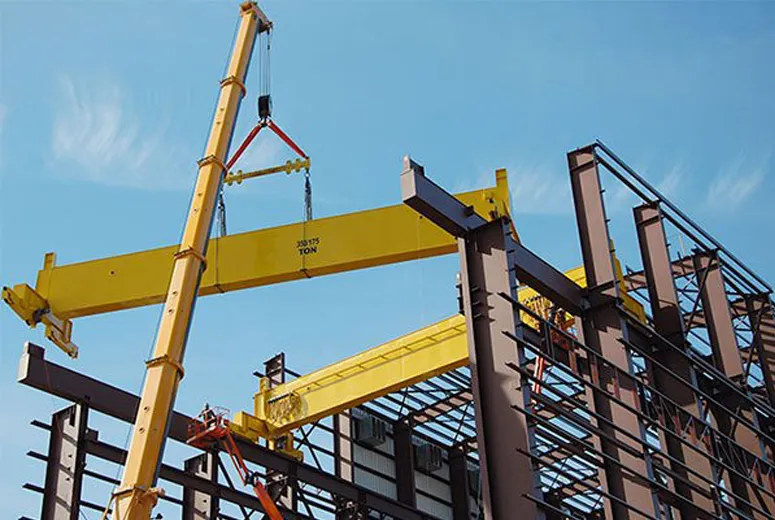
- Logistics and Erection: Fabricated components are meticulously labeled, packed, and shipped to the site. On-site, experienced erection crews assemble the structure using cranes and specialized equipment, following detailed erection drawings. This phase emphasizes safety protocols and precise alignment.
Target Industries and Advantages:
A metal factory building constructed with steel serves a broad spectrum of industries:
- Petrochemical & Energy: Housing processing units, storage facilities, and power generation plants, requiring structures resistant to chemical corrosion and extreme temperatures.
- Metallurgy: Providing robust enclosures for foundries, rolling mills, and smelters, capable of supporting heavy equipment and withstanding high thermal loads.
- Water Supply & Drainage: Constructing pump stations, treatment plants, and infrastructure facilities that demand long service life in moist environments.
- Automotive: Production lines, assembly plants, and R&D centers benefit from large clear spans and flexible layouts.
- Logistics & Warehousing: High-bay warehouses and distribution centers leverage vast clear spans for efficient material handling and storage.
In these scenarios, the advantages are palpable: energy saving through optimized insulation and natural light integration, superior corrosion resistance with proper coatings, rapid construction minimizing project timelines, and impressive service life often exceeding 50 years with minimal maintenance.
Technical Specifications and Parameters
Understanding the technical specifications of a steel construction factory is crucial for project planning and execution. These parameters define the structural integrity, performance, and compliance of the building.
Key Structural and Performance Parameters:
| Parameter | Typical Range/Specification | Notes/Standards |
|---|---|---|
| Primary Steel Grade | Q235B, Q345B (China); A36, A572 Gr.50 (USA) | Selected based on load requirements and local availability. |
| Secondary Steel Grade | Q235, Galvanized Z/C purlins | Cold-formed sections for roofing and wall supports. |
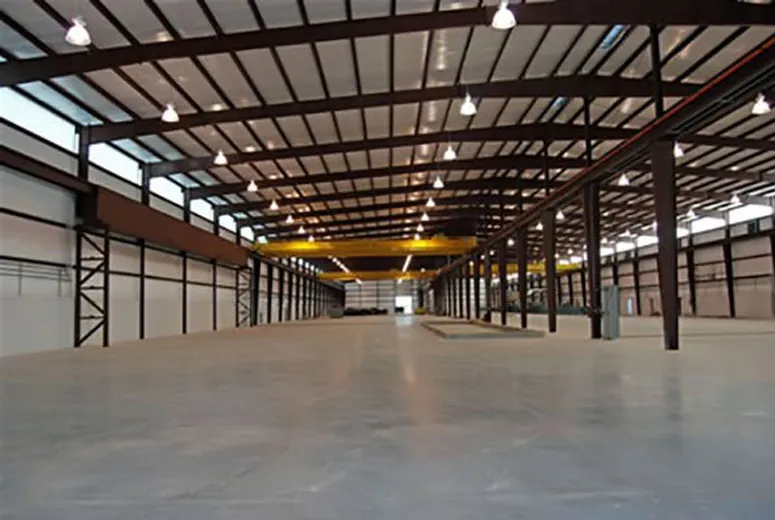
| Clear Span | 15m to 100m+ | Achievable with portal frame or truss systems. |
| Eave Height | 6m to 30m+ | Dependent on operational requirements (e.g., crane height). |
| Roof Pitch | 5% to 20% | Optimized for rainwater runoff and aesthetics. |
| Wind Load Resistance | 0.3 kN/m² to 1.5 kN/m² (up to 200 km/h) | Calculated based on local building codes (ASCE 7, Eurocode 1). |
| Snow Load Resistance | 0 kN/m² to 2.0 kN/m² (dependent on region) | Designed to local climatic conditions. |
| Seismic Resistance | Up to Zone IV (Richter Scale 8) | Designed to IBC, Eurocode 8, or local seismic codes. |
| Corrosion Protection | Primer (70µm) + Topcoat (50µm) / Hot-Dip Galvanization (80-120µm) | Surface preparation to SA2.5 before coating. |
| Insulation Options | Fiberglass wool, Rockwool, EPS/PU Sandwich Panels | R-values customizable for thermal performance. |
These parameters underscore the engineered precision behind every modern steel construction factory. The ability to precisely calculate and design for these variables ensures that the final structure is not only compliant but also optimized for its intended operational environment.
Application Scenarios and Exemplary Case Studies
The versatility of a steel construction factory allows for its application across an expansive range of industrial contexts. Its adaptability to various functional requirements, from supporting heavy machinery to accommodating complex logistical flows, makes it an ideal solution for modern manufacturing and service industries.
Diverse Applications:
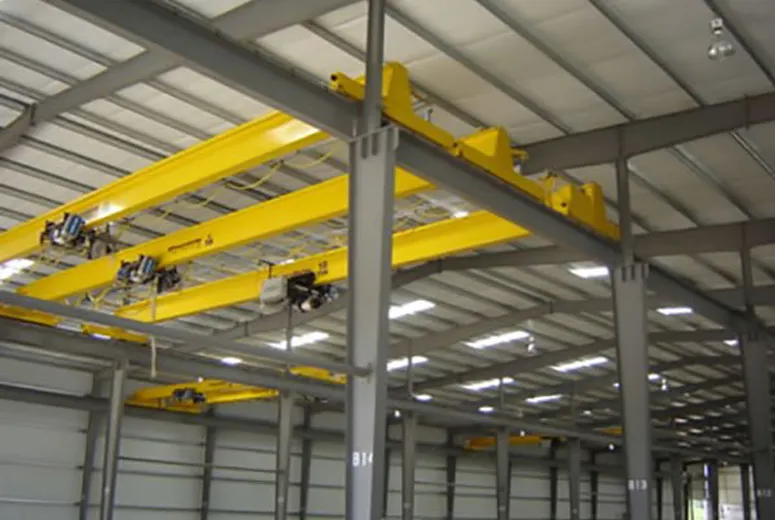
- Heavy Manufacturing: Facilities requiring significant clear spans and high eave heights to accommodate overhead cranes (e.g., up to 100-ton capacity) for moving heavy components. The structural integrity of a super frame steel factory is inherently suited for these dynamic loads.
- Light Industrial Assembly: From electronics assembly to textile production, steel buildings offer rapid deployment and easily configurable interior spaces for flexible production lines.
- Logistics and Distribution Centers: Large-span warehouses with high stacking capabilities, designed for efficient material flow and accommodating automated storage and retrieval systems (AS/RS). The ability to add mezzanines and offices within the existing structure adds significant value.
- Agricultural Facilities: Barns, processing plants, and equipment storage with durable, weather-resistant structures.
- Aviation Hangars: Requiring expansive clear spans for aircraft maintenance and storage, with robust door systems.
Illustrative Case Study (Generalized):
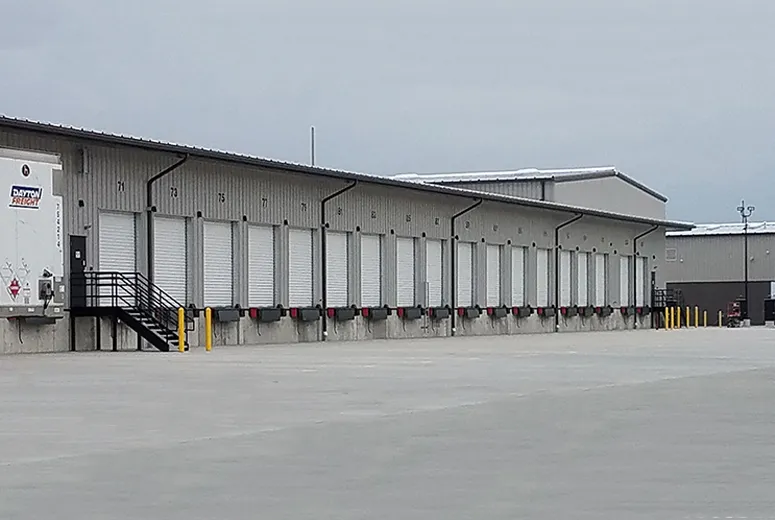
A prominent automotive parts manufacturer in Southeast Asia required a new production facility with a total area of 25,000 sq.m. The core requirements included multiple bays capable of supporting 20-ton overhead cranes, a clear height of 15 meters, and a construction timeline of under 8 months to meet product launch schedules. A traditional concrete structure would have extended the timeline significantly and incurred higher costs due to formwork and curing. Our solution involved designing a pre-engineered metal factory building with a rigid portal frame system. Using Q345B steel for primary members and galvanized Z-purlins for secondary framing, coupled with an insulated sandwich panel roof and walls, the project was completed in 7 months. The modular nature allowed simultaneous foundation work and off-site fabrication. The client reported a 20% saving on overall construction costs compared to conventional methods and commended the rapid project delivery, which enabled them to launch their new product line ahead of schedule. Post-occupancy feedback highlighted the excellent natural lighting and ventilation, contributing to a superior working environment and reduced operational energy costs.
Technical Advantages and Performance Superiority
The selection of steel for industrial construction is driven by a host of technical advantages that translate directly into operational benefits and long-term value. These benefits extend beyond mere structural strength, encompassing economic, environmental, and functional aspects.
Core Advantages:
- High Strength-to-Weight Ratio: Steel possesses an exceptional strength-to-weight ratio, meaning less material can achieve greater structural capacity. This allows for lighter foundations, larger clear spans, and more efficient use of space, characteristic of an advanced steel construction factory.
- Durability and Longevity: With proper design and protective coatings (e.g., hot-dip galvanization or high-performance paint systems), steel structures offer superior resistance to corrosion, pests, and weathering, ensuring a service life of 50 years or more with minimal maintenance.
- Rapid Construction: As components are pre-fabricated off-site in a controlled factory environment, on-site erection is significantly faster than traditional construction methods. This reduces overall project timelines, minimizes disruption, and allows businesses to commence operations sooner.
- Design Flexibility and Expandability: Steel structures offer unparalleled design freedom. They can be easily expanded, reconfigured, or even relocated, adapting to changing business needs. This makes a metal factory building an ideal long-term investment.
- Sustainability: Steel is 100% recyclable without loss of properties, making it an environmentally responsible choice. Modern steel buildings also incorporate features like insulated panels and efficient fenestration for enhanced energy performance, reducing the carbon footprint.
- Resistance to Seismic Activity: Steel's ductility allows it to absorb and dissipate seismic energy, providing superior resistance to earthquakes compared to brittle materials like concrete.
- Fire Resistance: While steel is non-combustible, its strength can be affected by extreme heat. However, modern fire protection coatings and passive fire protection systems effectively mitigate this risk, ensuring high fire ratings compliant with safety standards.
Vendor Comparison and Selection Criteria
Choosing the right partner for your steel construction factory project is paramount to its success. While many suppliers exist, discerning key differentiators ensures optimal quality, reliability, and value. The following comparison highlights critical aspects when evaluating potential vendors.
| Criterion | Leading Vendor Attributes | Sub-optimal Vendor Attributes |
|---|---|---|
| Engineering Expertise | In-house team of licensed structural engineers, advanced BIM capabilities, extensive portfolio. | Outsourced design, basic CAD, limited experience with complex loads. |
| Manufacturing Quality | ISO 9001 certified, automated fabrication lines (CNC cutting, robotic welding), stringent QC protocols (UT, NDT). | Manual processes, inconsistent QC, limited certifications. |
| Material Traceability | Full documentation of steel mill certificates, material test reports for every batch. | Limited or no traceability, generic material specifications. |
| Customization Capability | Ability to tailor designs for unique crane loads, large spans, specialized equipment, future expansion. | Limited standardized designs, difficulty accommodating bespoke needs. |
| Project Management | Dedicated project managers, clear communication channels, adherence to timelines, global logistics expertise. | Poor communication, frequent delays, lack of international shipping experience. |
| Post-Sale Support | Comprehensive warranty, readily available spare parts, technical support, installation guidance. | Limited warranty, difficulty obtaining support or replacement components. |
Choosing a vendor with a proven track record, robust engineering capabilities, and a commitment to quality and service is essential for a successful industrial building project. Prioritizing expertise and reliability will safeguard your investment and operational continuity.
Customized Solutions for Unique Industrial Demands
In the competitive industrial landscape, one-size-fits-all solutions rarely suffice. A modern steel construction factory thrives on its ability to be extensively customized, ensuring the facility perfectly aligns with specific operational workflows, environmental conditions, and strategic business objectives. This goes beyond simple dimensions, delving into intricate details that enhance functionality and efficiency.
Key Customization Areas:
- Structural Design Modifications: Adapting to varying crane capacities (e.g., single girder, double girder, gantry cranes), bay spacing requirements, roof slopes for specific climatic conditions (heavy snow vs. heavy rain), and seismic zone specifications. This includes designing for future expansion, allowing seamless integration of new bays or higher roof sections without compromising structural integrity.
- Cladding and Insulation Systems: Selection of roof and wall panels based on thermal performance (R-value), acoustic properties, fire rating, and aesthetic preferences. Options include insulated sandwich panels (PU, EPS, Rockwool cores), single skin sheeting with internal insulation, or specialized corrosive-resistant panels.
- Ventilation and Lighting: Integrating natural ventilation systems (louvers, roof monitors, ridge vents), mechanical ventilation (exhaust fans), and optimizing fenestration (skylights, translucent panels, windows) to maximize natural light, thereby reducing energy consumption and improving the working environment in the super frame steel factory.
- Access and Safety Features: Custom designed doors (rolling, sliding, overhead), personnel doors, ramp access, emergency exits, and integrated safety elements like fall protection anchor points, guardrails, and fire suppression system provisions.
- Interior Fit-out and Mezzanines: Incorporating multi-story office spaces, control rooms, cafeterias, laboratories, and storage mezzanines within the main structural framework, providing complete turnkey solutions for a comprehensive metal factory building.
- Specialized Coatings: Beyond standard anti-corrosion paints, specialized coatings can be applied for chemical resistance, high-temperature environments, or anti-static properties, tailored to the specific industrial process.
Engaging with a vendor capable of delivering bespoke solutions ensures that your industrial facility is not just a building, but a highly optimized asset that directly supports and enhances your core operations, maximizes efficiency, and provides a safe and productive environment for your workforce.
Ensuring Trust and Transparency: FAQs, Lead Times, Warranty, and Support
Building a steel construction factory is a significant investment. Transparency in every aspect, from initial quotation to post-handover support, is crucial for fostering trust and ensuring client satisfaction. This section addresses common inquiries and outlines commitments to quality and service.
Frequently Asked Questions (FAQs):
Q: What is the typical lifespan of a steel industrial building?
A: With proper design, high-quality materials, and appropriate corrosion protection (e.g., galvanization or multi-layer paint systems), a steel industrial building can have a service life exceeding 50 years, often reaching 70-80 years with minimal maintenance.
Q: Are steel buildings environmentally friendly?
A: Yes, steel is one of the most sustainable construction materials. It is 100% recyclable, and its manufacturing process has become increasingly efficient. Additionally, steel buildings can be designed for optimal energy efficiency through superior insulation and natural light integration, reducing operational carbon footprint.
Q: What are the common lead times for a steel factory building project?
A: Lead times vary based on project complexity and size. Typically, design and engineering take 2-4 weeks, fabrication 4-8 weeks, and on-site erection 3-10 weeks. A standard 10,000 sq.m. industrial facility can often be completed within 4-6 months from design approval to handover, significantly faster than conventional methods.
Q: What kind of warranty is provided for the steel structure?
A: We typically offer a 10-year structural warranty covering materials and workmanship, provided the building is maintained according to recommendations. Specific details are outlined in the project contract, ensuring full transparency and peace of mind for your metal factory building.
Lead Time & Fulfillment Details:
Our streamlined process ensures efficient project delivery. Following final design approval, material procurement typically takes 1-2 weeks. Fabrication in our state-of-the-art facility then commences, guided by precise schedules. For international projects, shipping logistics are managed end-to-end, including customs clearance and delivery to site. Our dedicated project managers provide regular updates, ensuring clients are informed at every stage of their steel construction factory development.
Warranty Commitments:
We stand by the quality of our engineering and fabrication. Beyond the 10-year structural warranty, specific warranties may apply to roofing materials (up to 25 years for certain coatings) and other components. Our commitment is to deliver structures that perform reliably for decades, adhering to international quality standards such as ISO 9001. All warranty terms are clearly articulated in project documentation.
Customer Support Information:
Our relationship with clients extends beyond project completion. We offer comprehensive after-sales support, including technical assistance for any operational questions, guidance on maintenance best practices, and availability of replacement parts. Our support team is accessible via dedicated contact channels to ensure prompt and effective resolution of any concerns, reinforcing our commitment to long-term client success.
Conclusion: The Enduring Value of Steel Industrial Buildings
The modern steel construction factory represents the pinnacle of industrial building solutions, blending sophisticated engineering with economic efficiency and environmental responsibility. From its robust structural integrity and unparalleled design flexibility to its rapid deployment and long service life, steel offers a compelling array of advantages over traditional construction methods. The ability to customize every aspect of a super frame steel factory, from crane capacity to insulation specifics, ensures that each facility is not merely a structure but a highly optimized operational asset tailored to precise industrial demands. As industries continue to evolve, demanding greater speed, adaptability, and sustainability, steel industrial buildings will undoubtedly remain at the forefront, providing the essential infrastructure for global progress and innovation.
Investing in a high-quality metal factory building is a strategic decision that offers enduring value. By partnering with experienced vendors who prioritize expertise, quality, and comprehensive support, businesses can realize significant long-term benefits, ensuring their industrial operations are housed in facilities that are built to last, perform efficiently, and adapt to future challenges.
References:
- American Institute of Steel Construction (AISC) - Steel Construction Manual.
- International Building Code (IBC) - Structural Provisions for Steel.
- Eurocode 3: Design of Steel Structures - General Rules and Rules for Buildings.
- Journal of Constructional Steel Research - Elsevier.
- ASTM International - Standards for Steel and Steel Alloys.
- Frost & Sullivan - Global Pre-Engineered Buildings Market Analysis.
-
Complete Guide to Metal Garage with Apartment Cost and Budgeting
NewsApr.16,2026
-
Understanding Metal Garage Cost and Complete Investment Guide
NewsApr.09,2026
-
Understanding the Cost to Build a Metal Garage for Your Property
NewsApr.07,2026
-
Understanding the Cost of Metal Garage Building and Factors to Consider
NewsApr.04,2026
-
Understanding the Cost of a 20x30 Metal Garage and Key Considerations
NewsMar.31,2026
-
Understanding the Cost for Metal Garage Construction and Installation
NewsMar.28,2026
Products categories
Our Latest News
We have a professional design team and an excellent production and construction team.